
What Eyewear Insiders Know That You Don't
It's curious how we approach the one thing that never leaves our face. Your glasses become intertwined with how people recognize you, remember you, and judge you.
I was drinking whiskey on a friend's balcony in Sydney when he mentioned his mate's sunglasses business. Not exactly the most inspiring origin story.

Ariel Resnik
26/01/2026

I was drinking whiskey on a friend's balcony in Sydney when he mentioned his mate's sunglasses business. Not exactly the most inspiring origin story.
I was back home in Australia, visiting. Tel Aviv had become home by then, though I couldn't have explained why. Something about the energy, the chaos, the way the city never quite settles. I was between projects—which sounds more romantic than it was. Mostly I was just trying to figure out what came next.
I'd spent much of my early adult life traveling the world, living with people in different countries, learning how they approached life. It shapes your perspective on what really matters and how people connect.
The sunglasses were sitting around his place. Simple frames, nothing flashy. His mate had started the company maybe two years earlier, and he'd watched it go from nothing to something pretty quickly.
I wasn't actively hunting for a business opportunity. Honestly, I was just enjoying catching up with friends and family. But something about those sunglasses stuck with me.
Maybe it was the minimalist in me—I'd spent years living out of a backpack, owning only what I actually needed. These glasses felt like that. Functional, well-designed, unpretentious. They did their job without making a fuss about it.
So when his friend agreed to meet me, I said yes. When that meeting led to packing a small case with 16 sunglasses to take back to Tel Aviv, I said yes to that too. It's how I've always operated—say yes first, figure out the details later.
Sometimes it works out. Sometimes it doesn't. This time... well, we'll see.

The first real test came on a Friday afternoon at Yom Tov, this cafe next to the shuk.
I'd brought the case of sunglasses thinking I'd show them to a friend over beers. It was busy that afternoon—typical Tel Aviv Friday energy, everyone unwinding from the week. On impulse, I opened the case on our table.
Within minutes, people were coming over. Trying them on. Asking if they were for sale.
"No, just samples," I kept saying. But this one guy was persistent. He really wanted to buy a pair. Maybe two. Eventually I gave in and sold them to him.
That evening, walking home, I started to wonder. Maybe there's something here.
The original plan—if you could call it a plan—was to work as a distributor. Import the glasses, sell them to Israeli retailers. Simple enough.
But after spending a few days walking around Tel Aviv, visiting local shops, I realized something important. Distributors can't control how their brands are presented.
The way frames are displayed, explained, experienced—it all matters.
That's when I decided to open my own shop.
Now, here's the thing. I knew absolutely nothing about retail. Nothing. I'd spent years as what you might call a professional guest—traveling, staying with people, walking through cities looking up at architecture, not down at storefronts. Shopping, beyond the basics, wasn't really part of my world.
I found this tiny space in Shuk Hapishpishim, in Yafo. Fourteen square meters. Beautiful curved ceiling, very Arabic style, lots of character. Over a weekend, I set it up with three sunglass models from the Australian collection and some artwork from a friend.
Opening day arrived. I was ready.
Except I wasn't.
The quiet moments between customers were... educational. There I was, sitting in an actual shop, serving actual customers, and I found myself doing what any reasonable person would do:
I opened my laptop and googled "how does retail work?"
Looking back, maybe not knowing the rules was helpful—I wasn't constrained by industry assumptions. I was bringing Australian service culture to a market where that was genuinely different. Fresh eyes, for better or worse.
The next two years became my education in everything: retail, eyewear, customer service, inventory management, the psychology of how people actually shop for glasses. Because here's another embarrassing admission—I knew almost nothing about glasses either. Frame construction, lens technology, face shapes, optical principles. All foreign territory.
But I discovered something important during those two years: I genuinely loved two things. Glasses, which surprised me. And creating experiences for people that they'd remember, which didn't.

Milan changed how I saw everything, though not in the way I expected.
I'd met Jeremy at a small trade show in London. He was in his seventies, had been in the optical industry for six decades and ran a production company in northern Italy. When he suggested I come to the Milan trade show—the big one, the industry epicenter—and invited me to visit his headquarters in the Dolomites, I said yes. Of course.
Milan was overwhelming. Thousands of exhibitors, buyers from everywhere, the entire ecosystem under one roof. I spent the first day just trying to orient myself.
The far east section was monotonous. Stand after stand of cheap glasses from China. Nothing redeeming about them—just volume and price competition. The corporate area felt sterile. Lots of perspex and LED lighting, people in suits, everything very professional and very boring.
But then I found the independent section.
The difference was immediate. You could feel it—the energy, the craftsmanship, the attention to detail. Here was where innovation lived, where creativity flourished. Each piece felt like it meant something.
That's when it hit me: there's this huge disconnect between what consumers understand and what's actually happening in this industry. Those luxury labels everyone recognizes? Most of them are made by the same massive conglomerates, often in the same factories as the bargain alternatives.
The real quality, the real innovation—it was all happening in the independent sector. Small companies, individual designers, people who actually cared about what they were making.
Jeremy's invitation to the Dolomites sealed it. Those villages in the mountains, covered in snow—it felt like stepping into another world. This is where much of the independent sector comes from. Small factories, family businesses, people who've been perfecting their craft for generations.
Watching glasses being made, seeing the precision and patience required, understanding the decades of knowledge embedded in every step—it clarified what I wanted to create.
I wanted to build a bridge between these dedicated makers and people who would truly appreciate their work.

Back in Tel Aviv, I started thinking bigger.
I'd been learning about retail, but I was also studying the eyewear market itself. Every retail experience seemed incomplete—efficiency without quality, clinical care without warmth, luxury labels without substance, personal service without sophistication. What if we refused to compromise?
I had this advantage—I was Australian. That might not sound like much, but in the context of Israeli service culture, it was significant. I'd grown up with completely different expectations about how customers should be treated. In Israel, good service is the exception. In Australia, it's the baseline.
Then I found the space: a UNESCO-listed building on Nahalat Binyamin. The moment I walked in, I knew this was it.
I called Alex Nicholls, a friend from Sydney who's an incredibly talented architect. This was crucial—most shops are designed by retail designers, but I wanted something fundamentally different. An architect thinks about how design shapes human experience. We spent months on concepts, exploring materials, considering every detail that would affect how people felt walking through our doors.
But I was missing something essential. To really reimagine vision care, I needed an optometrist who shared the vision. Someone who understood that eye care could be more than just clinical efficiency.
That's when I was introduced to Noah Rappaport.
From our first conversation, there was immediate alignment. Another Australian, which helped—we spoke the same language, literally and culturally. He had the technical expertise and innovative approach that would complete what we were building. It quickly became clear this was meant to be a partnership.
The construction took eighteen months. Every material choice, every layout decision, every detail mattered. The time and resources we invested reflected how much this vision meant to us.
Just as we were ready to open, COVID hit.
We waited through lockdown, wondering if people would actually want what we'd created. When we finally opened in June 2020, the response was... well, it exceeded our hopes.

Five years later, despite everything—pandemic, political unrest, war—we've reached a place where all the learning, all the mistakes, all the late nights feel worth it.
The validation came in ways I never expected. What I'd imagined as a local Tel Aviv business now serves over 4,000 clients from across the country. Others travel from overseas. That still surprises me.
But the real evidence isn't in the numbers. It's in the moments. The physical expressions of genuine connection: smiles, hugs, sincere thanks. Watching someone discover clarity they'd forgotten was possible. Seeing them recognize themselves in frames that finally reflect who they are.
We serve accomplished people across many disciplines. The common thread is people who understand that glasses aren't just vision correction—they're identity expression, your business card, the first thing people notice about you.
Sometimes I think about that evening on the balcony in Sydney. How a casual conversation over a whiskey led to everything that followed. What felt accidental then feels... not inevitable, exactly, but right. Like it was always going to happen this way, even though I had no idea where it was leading.
I still look things up when I don't know them. Still ask questions that might seem obvious. Still approach each day wondering how we can do better. It's the foundation of everything worthwhile we've built.
We're still that Australian business that happens to be in Israel. Still bringing fresh eyes to old assumptions. Still saying yes to possibilities and figuring out the consequences later.
The journey continues.
And if you're reading this, you're now part of it.
Ariel Resnik
Founder & CEO, Glassworks
From the Magazine
Design, vision care, and culture — stories from the world of independent eyewear.
It's curious how we approach the one thing that never leaves our face. Your glasses become intertwined with how people recognize you, remember you, and judge you.

Vision is our most intimate relationship with the world—and like all relationships, it evolves. Around age 40, your eyes begin a new chapter.
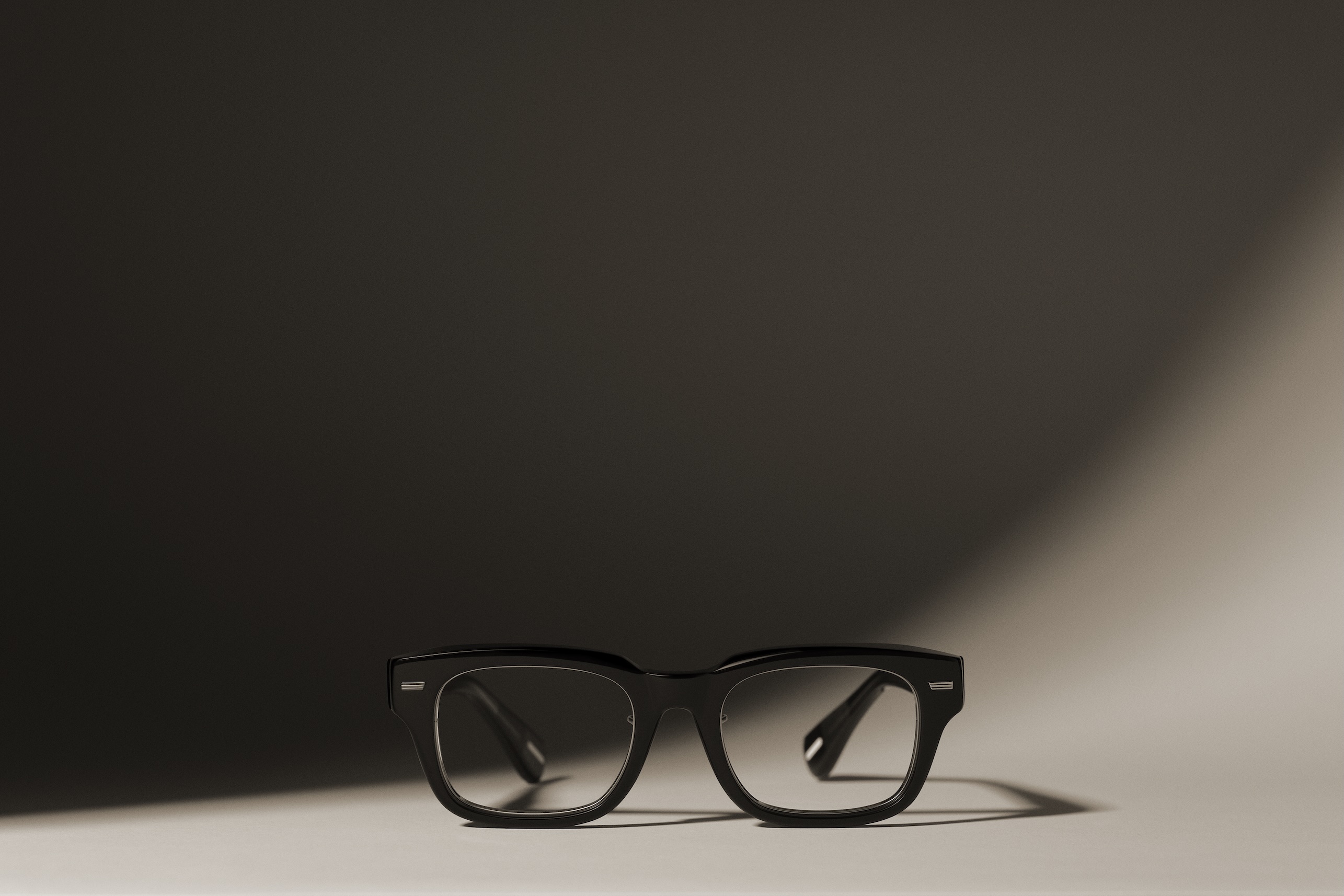
Behind every luxury logo lies a question: what are you actually paying for? The answer might surprise you.
